Why Commercial Glass Repair Demands a Professional Touch
Walking through a DFW commercial real estate property after a hailstorm, I saw firsthand how quickly a shattered window can shut down a retail space. The storefront glass was gone, the security gate was down, and the owner was already on the phone trying to find someone who could handle the job before sundown. That experience stuck with me because it showed how commercial glass repair is never just about replacing a pane. It is about safety, security, and keeping a business operational.
Commercial glass repair covers a wide range of situations, from a single cracked window in a small office to a full storefront restoration after an accident. The work demands knowledge of materials, building codes, and installation methods that are different from residential work. A lot of people assume glass is glass, but in the fenestration industry, the differences between auto glass versus architectural glass alone can trip up an inexperienced contractor.
Understanding the Stakes with Commercial Glass
When a commercial property needs glass work, the first thing I look at is the type of glass involved. Tempered glass and laminated glass are common in commercial settings because of their strength and safety characteristics. Tempered glass is heat-treated so that when it breaks, it crumbles into small, relatively harmless pieces rather than forming dangerous shards. Laminated glass, on the other hand, has a plastic interlayer that holds the glass together even after impact. That makes it ideal for storefront glass and areas where impact resistance is critical.
I have seen building owners try to save money by using standard annealed glass in a commercial door, only to have it fail catastrophically during a routine cleaning. The cost of that mistake, including potential liability and downtime, far exceeds the upfront savings. Professional commercial glass repair always considers the intended use of the glass and the specific safety requirements of the space.
Common Scenarios That Require Commercial Glass Repair
One of the most frequent calls I get involves shattered window repair after vandalism, break-ins, or severe weather. In a busy commercial district, a broken window is more than an eyesight issue. It is a security risk and a signal that the business is vulnerable. A quick response is essential, but speed without quality can lead to improper seals, condensation between panes, and eventual fogging. That is why I always recommend working with a company that understands the full scope of the repair, not just the glass swap.

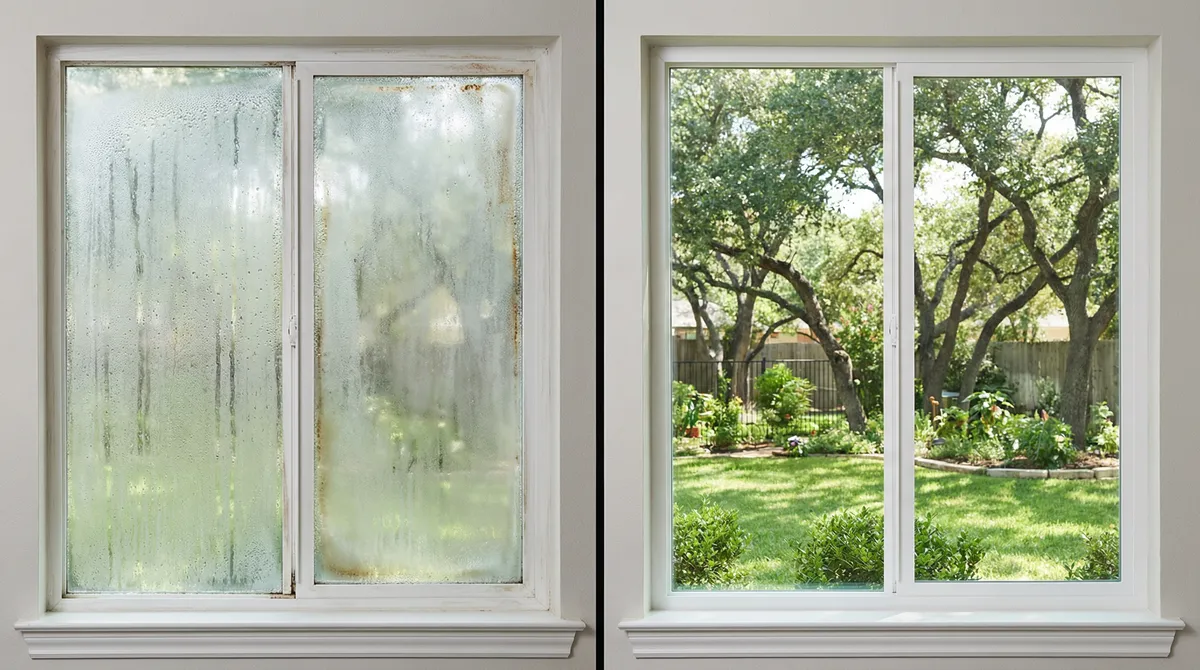
Another common issue is seal failure in double-pane windows. When the sealant around the glass breaks down, moisture gets inside and causes the glass to fog up. This is especially common in older commercial buildings where the silicone sealant has dried out or been exposed to extreme temperature swings. The fix often requires IGU replacement, which means removing the entire insulated glass unit and installing a new one with proper Warm Edge Spacers. Warm Edge Spacers improve thermal performance at the edge of the glass and reduce condensation, which is a big deal for energy bills and tenant comfort.
I have also worked on projects where the glass itself was fine, but the frame or the seals around it had deteriorated. In those cases, the repair involved removing the old sealant, cleaning the surface, and applying fresh silicone sealant to restore the weathertight barrier. It is a detail-oriented task, but it makes a huge difference in the longevity of the window.
Materials and Technologies in Commercial Glass Repair
The glass industry has evolved significantly in the past two decades. Products like IGlass and systems from Thermoseal Group have raised the bar for performance and consistency. IGlass is a high-performance glass product that offers better insulation and clarity than older options. Thermoseal Group specializes in components for insulated glass units, including spacers and sealants that help maintain the integrity of the unit over time.
When a commercial property owner asks about upgrading their windows during a repair, I often point them toward energy-efficient glass. It is not just about saving money on heating and cooling. Energy-efficient glass also reduces UV damage to interior furnishings and makes the space more comfortable for occupants. In a market like DFW commercial real estate, where tenants have high expectations for building performance, that can be a competitive advantage.
Custom glass fabrication is another area where expertise matters. Not every window is a standard size. Some commercial spaces have curved glass, oversized panels, or glass with specific tinting requirements. A repair company that can handle custom fabrication saves the property owner from having to wait weeks for special orders or settle for a less-than-perfect fit.
Safety, Codes, and Compliance
Commercial glass repair is not a DIY job, partly because of the safety risks and partly because of the legal requirements. Building codes in most jurisdictions specify the type of glass that can be used in certain locations. For example, glass near doors, in showers, or in areas where people might fall into it must be tempered or laminated. OSHA safety standards also apply to the installation process itself. Workers handling glass on a commercial site need proper equipment and training to avoid injury.
I recall a project where a property manager wanted to replace a large storefront window with standard annealed glass because it was cheaper. When I explained that the local building code required tempered glass in that location due to its proximity to a pedestrian walkway, they understood the risk. We went with tempered glass, and the installation passed inspection without any issues. That kind of scenario plays out all the time, and it is why hiring someone who knows the codes is non-negotiable.
Another consideration is insulation. In some commercial settings, glass wool insulation is used around window frames to improve thermal performance. It is a simple material, but it has to be handled correctly to avoid moisture problems. Combining glass wool with a proper sealant system creates a barrier that keeps the building comfortable and efficient.
Choosing a Commercial Glass Repair Partner
When you need commercial glass repair, look for a company that offers a free estimate and takes the time to assess the situation before quoting a price. A reputable contractor will walk the site, check the frame condition, note the type of glass, and ask about the building's history. They should also be able to explain why a particular glass type or installation method is appropriate for your situation.
Experience with the local market matters, too. In the DFW area, weather patterns, building styles, and common property management practices all influence the best approach to a repair. A company that works regularly with DFW commercial real estate properties will know which materials hold up best in the local climate and how to coordinate with building managers and tenants to minimize disruption.
I also recommend asking about the warranty on both the glass and the installation. A confident contractor will stand behind their work. If they are using quality materials from reputable suppliers like Thermoseal Group or custom fabrication shops, they should be able to offer a guarantee that covers seal failure, condensation issues, and glass defects.
The Bottom Line on Commercial Glass Repair
Commercial glass repair is more than a simple replacement job. It involves understanding the physics of thermal expansion, the chemistry of sealants, the engineering of insulated glass units, and the legal framework of building codes and safety standards. It requires tools and training that most general contractors do not have on hand. And it demands a level of precision that only comes from doing the work day in and day out.

Whether you are dealing with a single shattered window or a full storefront restoration, the right approach starts with knowing what you are working with. Tempered glass, laminated glass, double-pane windows, and custom shapes each present their own challenges. Using the correct materials, such as Warm Edge Spacers and high-quality silicone sealant, ensures the repair lasts and performs as intended.
If you are responsible for a commercial property in the DFW area, take the time to find a glass repair specialist who can handle the job from start to finish. Ask for a free estimate, check their references, and make sure they understand the specific requirements of your building. Good commercial glass repair protects your investment, keeps your tenants safe, and keeps your property looking professional.